Uncategorized

Uncategorized

Trump’s Freedom Cities: America’s New Frontier for Growth

When President Donald Trump unveiled the idea of building “Freedom Cities,” it struck some as bold, others as controversial, but to many, it was exactly the kind of visionary proposal America needed. The nation is currently facing a historic housing shortage, spiraling infrastructure costs, and growing uncertainty about the future of work. In these situations, Trump’s plan represents a frontier moment that could redefine American growth in the 21st century. Why Freedom Cities? The United States is short between 3.8 and 5.5 million housing units. For millions of families, homeownership is out of reach, rents are unaffordable, and entire generations are stuck in cycles of financial instability. Traditional approaches, like subsidies, zoning tweaks, and piecemeal housing programs, have failed to keep up with demand. Trump’s proposal cuts through the incrementalism. Instead of patching old systems, it calls for the creation of entirely new, master-planned metropolitan centers on underutilized federal land. These Freedom Cities would be built from the ground up, with integrated housing, water, energy, transportation, and commerce. This is an industrial-era scale project, something akin to when Henry Ford democratized the automobile or when America built the interstate highway system. The Design of Growth Freedom Cities are about scale and integration. Unlike typical housing developments that sprawl haphazardly, these communities would be master-planned to include: A Vision Backed by Solutions Robert Simpson’s new book, From Hydrants to Housing: Reframing the Western Crisis, highlights that Freedom Cities are not utopian ideas, but practical solutions to America’s intertwined crises of housing, water, and infrastructure. Drawing from his expertise in construction management and site development, he lays out how these cities could be financed, built, and sustained, not just in the United States, but as exportable models for Baja California, the Middle East, Africa, and beyond. The book shows how Freedom Cities could restore the American Dream of homeownership, anchor economic stability, and project U.S. leadership abroad. It also warns about what happens if we fail to act and seize the opportunity.

Uncategorized

Baja California as a U.S. Protectorate: A Strategic Vision for the Future

Baja California, the northernmost region of Mexico’s Baja Peninsula, has never been part of the United States. Despite its geographic proximity and historical intersections, it remained under Mexican sovereignty after the 1848 Treaty of Guadalupe Hidalgo. However, in today’s era of cartel violence, water scarcity, and regional instability, the idea of Baja California becoming a U.S. protectorate while retaining its culture and governance  offers a radical but realistic path forward. The Water Crisis in Baja California Water scarcity is a critical threat to Baja California’s survival. Cities like Tijuana are running out of freshwater sources, and expansion efforts from the Colorado River aqueduct are no longer sufficient. Although emergency deliveries from the United States have provided short-term relief under complex cross-border agreements, this fragile system is set to expire in 2027.Without immediate large-scale desalination projects, the region faces ecological and humanitarian disaster. Current recycling efforts fall far short of meeting demand, and desalination remains the only viable long-term solution. Why a Protectorate Framework Makes Sense Rather than annexation, a protectorate framework could provide Baja California with the defense, infrastructure, and economic stability it desperately needs, while preserving its Mexican identity. Historical models like Palau’s compact with the U.S. and the Cook Islands’ relationship with New Zealand show that protectorates can be partnerships rather than takeovers.Under such a model, Baja would retain its elected leadership and culture but benefit from American security guarantees, investment, and modernized infrastructure—especially in water management and public safety. Desalination, SMRs, and Population Growth The U.S. could transform Baja California’s water future by installing Small Modular Reactors (SMRs) to power reverse osmosis (RO) desalination plants along the peninsula’s 2,038-mile coastline. These facilities could produce enough freshwater to support a population exceeding 40 million more than ten times the current 3.8 million residents. With sustainable water sources, Baja could blossom into a thriving region, offering new homes for immigrants and a proving ground for innovative technologies. It could also serve as a model for future partnerships between sovereign nations and protective powers. Cartel Violence and the Security Imperative Perhaps the most urgent need for a protectorate model is the ongoing threat of cartel violence.Baja California, like much of northern Mexico, suffers from extortion, corruption, and cartel domination. A U.S. military presence, including a new joint services base at the peninsula’s southern tip, could significantly degrade cartel logistics and operations. In addition, a naval base positioned across from Sinaloa, the heartland of fentanyl production would provide vital maritime security. For Mexico, relieving the burden of defending a distant and vulnerable region could allow for better resource allocation elsewhere. Geopolitical Stakes: Beyond Borders The fentanyl crisis has claimed over 1 million American lives since 1999. With chemicalsoften shipped from China to Mexican ports, then processed and smuggled into the U.S., this issue represents more than domestic crime, it is a form of chemical warfare. Given these stakes, the U.S. could even reconsider its obligations under the 1944 Water Treaty with Mexico, where it currently supplies 1.5 million acre-feet of Colorado River water annually. As geopolitical tensions rise, water could become a tool of leverage, much like oil was in the 20th century. Baja California as a Strategic Buffer Zone Geographically, Baja is distinct from mainland Mexico. Isolated by the Gulf of California, it has little agricultural value for drug cultivation, making it a poor strategic base for cartel operations compared to states like Sinaloa or Michoacán. A proposed extension of the U.S. border wall southward could physically separate Baja from the mainland, further shielding it from trafficking networks. In doing so, Baja would become a true buffer zone, protecting American citizens while offering prosperity to its residents. Solving the Silent Sewage Crisis One overlooked issue is the pollution of U.S. waters from Baja California’s failing sewage infrastructure.Each year, untreated sewage flows from Tijuana into Southern California’s beaches and waterways, causing environmental damage and public health risks. Addressing this through U.S.-funded infrastructure projects including modern sewage treatment and waste management would restore ecosystems, protect public health, and strengthen cross-border ties. A Modern Solution to a Cross-Border Crisis The future of Baja California need not be like its past. It might emerge as a spark of stability, wealth, and creativity in North America under a protectorate paradigm. This plan is a mutual opportunity rather than a hostile annexation. For Baja, it means security, investment, clean water, and hope. For the United States, it secures its southern flank, disrupts cartel operations, manages immigration more humanely, and strengthens its hemisphere-wide influence. With the resources available and the crisis at hand, what’s needed is not caution but vision and willpower. Baja California, as a U.S. protectorate, could mark a bold new chapter in American and Mexican history, built on security, prosperity, and shared humanity.


Uncategorized

Freedom Cities: America’s Answer to the Housing Crisis

Across the United States, a housing shortage is reaching critical levels. Between 2021 and 2022, the U.S. fell short by 4.5 million homes while families grew by 1.8 million, according to LiveNow from FOX. Escalating costs, supply chain disruptions, and zoning bottlenecks have made affordable homeownership feel out of reach, especially for the younger generation. But what if the solution isn’t just more homes—what if it’s entirely new cities? Here’s the concept of Freedom Cities, a revolutionary plan to build high-density, modular urban centers on federal land across the arid Western United States. Driven by bipartisan urgency, modern technology, and the rethinking of outdated regulations, Freedom Cities offers a vision of sustainability, affordability, and opportunity. A Bipartisan Wake-Up Call Both the White House and the Republican National Committee agree on one powerful idea: surplus federal land could be the key to solving the housing crisis. But this isn’t just about selling land, but about entitling it. That means removing bureaucratic barriers that slow development and enabling efficient housing projects to begin where needed. Local zoning issues and environmental opposition have historically stood in the way of large-scale housing reform. Freedom Cities would work around this by building from the federal level up, offering a way to sidestep red tape and implement next-gen urban planning with modern needs in mind. Modular Housing: The Future is Factory-Built Freedom Cities reimagine homebuilding. Just like Henry Ford changed the car industry with the assembly line, modular construction promises to do the same for housing. By producing homes in controlled environments—factories and then transporting and assembling them on-site, we reduce cost, waste, and delay. Projects like 6th Street Place in Los Angeles, which houses formerly homeless individuals, have already proven the speed and affordability of this approach. Built in Idaho and shipped to LA, these homes are a powerful proof-of-concept. The Ideal Geography: BLM Lands in the Arid West Nearly one-third of the U.S. is federally owned, with the Bureau of Land Management (BLM) overseeing about 381,875 square miles, mainly in the arid West. Often flat, dry, and uninhabited, these lands are ideal for high-density developments that respect nature while efficiently using space. Think vertical: 32-story modular skyscrapers assembled like massive LEGO blocks. Or smaller, village-style cities built around mixed-use foundations, housing stacked above retail and parking spaces. These models create compact cities with minimal environmental impact. Water: The Critical Challenge Legendary geologist John Wesley Powell once warned that water in the arid West should never be separated from land policy. And he was right. Freedom Cities must embrace Advanced Wastewater Reclamation Systems (AWWRS) to survive. With 90% of indoor water reclaimable and systems like NASA’s reclaiming 98% on the ISS, sustainable water use isn’t science fiction, it’s science fact. By reclaiming water locally, these cities reduce reliance on costly, outdated water infrastructure and support both residents and surrounding agriculture. Selection Matters: Building Where it Works Ideal Freedom City sites must meet several criteria: These cities should rise in valleys covered with sage and dry grasses, where aquifers lie below, and connectivity can be enhanced. Freedom, Equity, and Opportunity The goal isn’t just to build homes but to build lives. Freedom Cities would serve veterans, youth, working-class families, and any American willing to relocate for a better life. These cities could restore the economic ladder’s bottom rungs—offering shelter and opportunity. The NIMBY (Not In My Backyard) mentality, once necessary for fighting pollution and corporate abuse, has now become a barrier to progress. Today’s crisis requires saying “yes” to smart growth, sustainability, and equitable access to housing. Final Thoughts: A Better Future, Block by Block! Freedom Cities aren’t just an idea but are a call to action. We can solve America’s housing shortage by combining technology, federal land access, and economic foresight with sustainable, scalable solutions. Let’s build upward. Let’s build smarter. Let’s build the future of America together.

Uncategorized

California’s Water Crisis: What Went Wrong? And How We Can Fix It

Urban sprawl and water scarcity are two of the most pressing challenges facing California and other southwestern states today. California’s reliance on the Colorado River, growing housing demands, climate change impacts, and infrastructure inefficiencies have combined to create a complex and increasingly urgent situation. This article explores the numerous issues surrounding water management, infrastructure development, housing, and sustainability solutions for the future. Satellites, the Moon, and a New Water Frontier NASA’s GRACE satellites now track underground water supplies with incredible accuracy. In the future, off-world settlements on the Moon and Mars will require artificial water cycles, too. So why not get really good at it here first? NASA’s closed-loop water systems could soon influence how we design entire cities back on Earth. Groundwater Depletion and the Central Valley Sadly, history shows what happens when we ignore sustainability. Draining Tulare Lake in the 1800s kickstarted a groundwater depletion crisis that still haunts California’s Central Valley today. New technologies like desalination offer hope, but the damage to rivers, lakes, and ecosystems will take serious effort to repair. Water Efficiency, Programs, and Government Waste California has launched programs like WUEFAP to promote water conservation. However, too often, these initiatives turn into expensive, inefficient exercises in bureaucracy. The reality is programs have diminishing returns when basic supply issues aren’t addressed first. Real solutions involve building new water supplies, desalination plants, and integrated aqueduct systems and not just telling farmers to “do more with less.” The Promise of Desalination Desalination is no longer a dream. San Diego’s Claude “Bud” Lewis Carlsbad Plant, for example, provides about 10% of the region’s water. Still, it’s just a start. California’s desalination capacity lags far behind that of places like Dubai, which desalinates 10 times more water. Scaling desalination and linking systems across the state could end decades of patchwork water management. Salton Sea and Environmental Management The Salton Sea Management Program aims to restore thousands of acres of habitat and suppress dangerous dust storms. But critics say much more needs to be done to prevent devastating climate impacts and worsening public health risks. Simply drying out lakes isn’t a solution. Legal and Human Rights Questions Water is not just a resource. It’s a right. The 14th Amendment guarantees life, liberty, and property, yet California’s mismanagement of water arguably threatens all three. When government policies drive up insurance costs, worsen fires, and make basic resources unaffordable, are they protecting citizens’ rights? Rising Costs and Water Affordability Crisis Water prices are spiraling in California. With rising bills outpacing inflation, many households struggle to afford basic needs. In Central Valley, drought-driven shortages have sent water prices as high as $2,000 per acre-foot, a massive jump from the usual $250. Billionaire-controlled water banks like the Kern Water Bank highlight how unequal the water economy has become. Meanwhile, low-income families face shutoffs, debt, and tough choices between food, housing, and water. Conclusion California’s story is one of incredible opportunity but also missed chances. If we invest in smart, scalable solutions like modular housing, desalination, and satellite-guided water management and fix our broken bureaucracies. We can definitely build a future that’s sustainable, affordable, and resilient. Now is the moment to take action before the next crisis hits even harder.

Uncategorized

Why Hydrants Fail in California

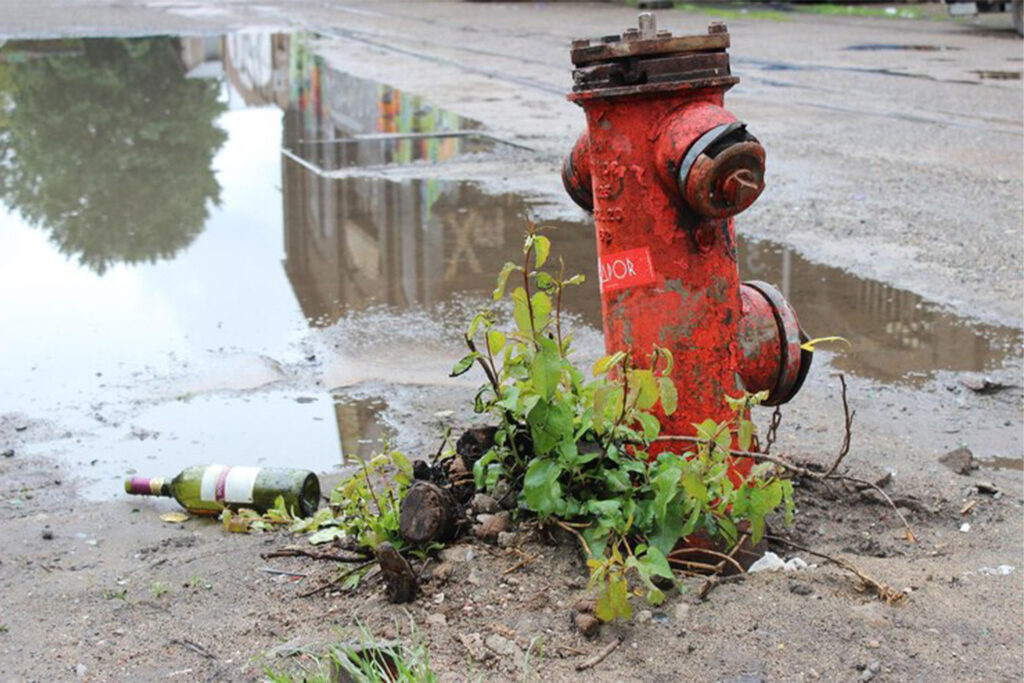
Lessons from Broken Systems, Bureaucratic Gaps, and False Assumptions Fire hydrants are among the most crucial components in our urban infrastructure. When a fire breaks out, the assumption is that a nearby hydrant will work immediately and reliably. Yet repeatedly, headlines tell a different story: hydrants that fail in the moment of need, with devastating consequences. But why do hydrants fail? In California, fire engines sometimes pull up to homes engulfed in flame only to find the hydrant dry. It’s not low-pressure but completely dry. Firefighters spin the wrench, but nothing happens. This is not rare. In cities, suburbs, and rural districts alike, hydrants fail when they’re needed most. Why? Because in California, the hydrant is often a ghost. It exists physically. It may even look freshly painted. But in function, when the test is real, it is hollow. A Splintered Infrastructure: Who Owns the Water? One of the core problems is that the entities responsible for water delivery and those responsible for fire suppression are not the same. There is a broken lattice of water authorities, municipal departments, and unincorporated districts. Each having its priorities, maps, and records. This means hydrants might be under the nominal care of a water utility that sees them as tertiary infrastructure—low priority, rarely tested. Meanwhile, fire departments operate under the assumption that these hydrants will deliver. There’s no shared database. No synchronized maintenance. Just paper maps, assumptions, and HOPE. Planning by Checkbox, Not Reality Developers, especially in fire-prone foothills, often simply add hydrants to their site plans to satisfy permitting requirements. But few are tested under stress. As noted in the book, “Many hydrants exist more as visual markers of safety than as working tools of suppression.” In remote neighborhoods, some hydrants are installed without confirmed access to a pressured water main. Others rely on electric pumps, which shut down in a blackout, rendering the entire system useless when wildfires strike and power is cut. The illusion is complete: houses sold as “firewise” come with hydrants that have never seen a single operational drill. Bureaucratic Evasion: Who Gets Blamed? When a hydrant fails, no one gets fired. The water agency blames supply strain. The city blames the developer. The fire department cites “unforeseen limitations.” But the families whose homes burned don’t care about the paperwork. As the book says plainly: “Responsibility is a shell game.” And with no centralized, enforced hydrant testing protocol across counties, the failures repeat, year after year, fire after fire. What Needs to Change? Simpson’s message is clear: hydrant failure is not a mystery—it’s a maintenance problem, a design oversight, and a systems failure. But it’s also a fixable one. Solutions Include: The humble hydrant deserves more attention in a world increasingly affected by climate extremes and urban density. It’s time we stop taking hydrants for granted. Because in the fight against fire, a single working hydrant can mean the difference between devastation and survival. Let’s protect what protects us.

Uncategorized

What California’s Fires and Water Failures Teach Us About the Future

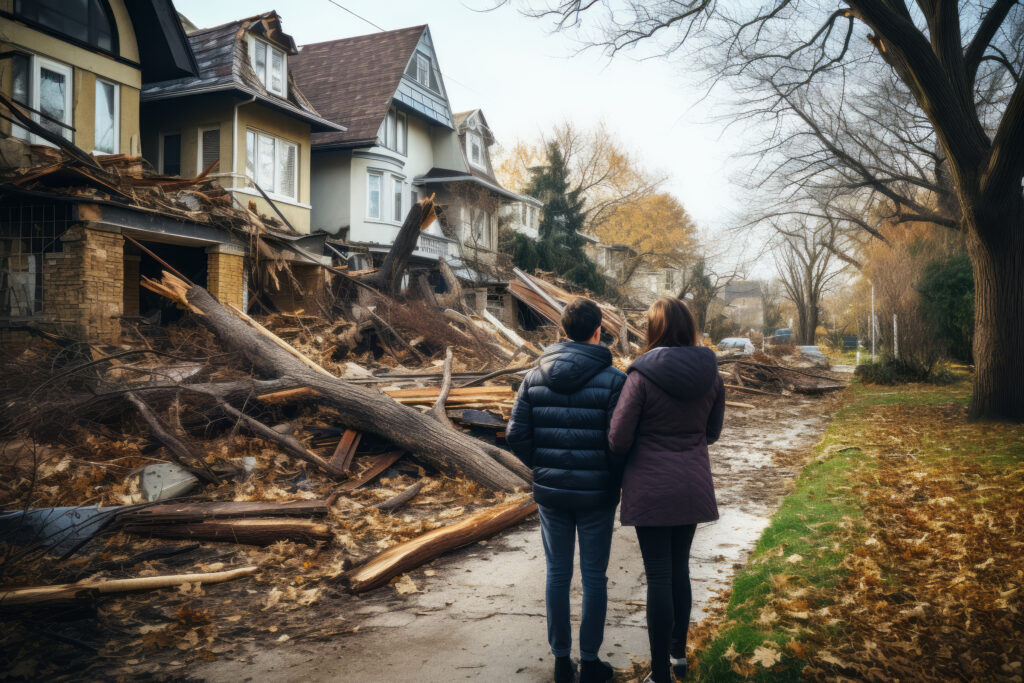
California has long been America’s golden state. This is the place where dreams are pursued, technology is pioneered, and cultural trends are born. Unfortunately, the dark reality of devastating wildfires and failing water infrastructure has cast a shadow on this state. These crises are systemic failures that threaten millions of lives and the economic stability of the nation. The fires of January 2025 serve as a harsh case study. Over the course of three weeks, flames consumed more than 12,000 homes across Los Angeles County and surrounding regions. The destruction was shocking, but what came afterward was even more alarming. By August of the same year, only 164 permits to rebuild had been issued. As a result, thousands of families remain displaced, while lawsuits against city agencies pile up. What went wrong? The answer points to more than fire suppression challenges. It exposes deep flaws in California’s water system. The Santa Ynez Reservoir Scandal One of the most striking failures occurred at the Santa Ynez Reservoir above Pacific Palisades. Designed to hold 117 million gallons of water, it should have been a backbone of firefighting capacity. Instead, when flames tore through the community, the reservoir stood empty. A series of delayed repairs and bureaucratic missteps left hydrants sputtering while homes burned. Governor Gavin Newsom has ordered an investigation, but the damage was already done. For many residents, the incident confirmed their fears: California’s infrastructure is outdated, fragile, and unprepared for the disasters it was built to defend against. The Impending Risk The real danger is that fire rarely comes alone. History shows us that when earthquakes hit, broken aqueducts and water mains leave hydrants dry, setting the stage for firestorms even more destructive than the initial shaking. The 1906 San Francisco earthquake proved this: 98% of the city’s destruction came not from the quake itself, but from fires that followed. Scientists now warn that Southern California is overdue for a “Big One” along the San Andreas Fault. A rupture of magnitude 7.8 or greater could cripple aqueducts, empty reservoirs, and paralyze water systems. Without water, firefighters would be left powerless to control the spreading fires. A Different Path Forward This is where Robert Simpson’s new book, From Hydrants to Housing: Reframing the Western Crisis, provides both analysis and solutions. Simpson argues that California’s failures highlight the urgent need for bold new models of housing and infrastructure. These models should not depend on fragile, century-old aqueducts and bureaucratic red tape. Instead, he outlines how Freedom Cities, which are large, master-planned communities built on federal land, could change the equation. These cities would be designed with water resilience at their core: modular desalination plants, advanced reclamation systems, and redundant storage to ensure that when disaster strikes, water doesn’t run out. They would also integrate fire-safe planning, modern energy systems, and streamlined governance to prevent the kinds of failures California has suffered. By reframing the crisis, Simpson shows that California’s disasters are opportunities to rethink how we build, where we build, and what safeguards we put in place for the generations ahead.

Uncategorized

America’s Next National Emergency: The Housing Shortage

America has faced many crises over its history, such as wars, recessions, pandemics, and natural disasters. However, one of the ongoing and greatest threats to the stability of its economy and society is unfolding more quietly. It is none other than a massive housing shortage. It may appear as a real estate problem on the surface, but in reality, it is a national emergency affecting millions of families, economic competitiveness, and even national security. The Scale of the Shortage Experts estimate the U.S. is short between 3.8 and 5.5 million housing units. That means millions of Americans are locked out of the opportunity to own a home or even secure affordable rent. In Western states like California, Nevada, and Arizona, the situation is especially severe. Rising demand collides with limited supply, pushing prices higher each year. The consequences ripple across society. Families spend more than 30% of their income on housing, which is the threshold for being considered “cost-burdened.” In California, over half of renters fall into this category, and even 38% of homeowners are in the same position. When Americans are forced to dedicate such a large share of their paycheck to housing, their education, quality of life, and retirement security suffer. A Rising Concern of the Nation Homeownership has historically been a cornerstone of the American Dream, a way for families to build wealth and stability across generations. When homeownership becomes unattainable, hope begins to erode. Worse, the housing shortage has direct consequences for the economy. Employers struggle to attract workers to regions where housing is scarce or unaffordable. Young families delay having children. Migration patterns shift, placing pressure on other states. In short, when millions of Americans can’t secure stable housing, the workforce mobility, productivity, and long-term competitiveness are all put at risk. And then there’s the geopolitical dimension. If America cannot house its people affordably, how can it credibly lead the world in solving global scarcity challenges? The Roots of the Crisis There are various issues fueling the housing shortage crisis. Federal land ownership in Western states ties up developable space. Zoning restrictions prevent higher-density construction in existing cities. Infrastructure is outdated, designed for an earlier era, and unable to keep up with modern needs. Capital distortions, from foreign investment to the explosion of data centers, further drive up land and energy costs. In California, the problem is compounded by water scarcity and wildfire risk. New homes require water, insurance, and reliable infrastructure, all of which are under strain. The tragic wildfires of 2025 revealed how vulnerable existing communities already are, and yet rebuilding has been slow, with bureaucratic hurdles leaving thousands of families in limbo. The National Emergency Demands Reliable Solutions Incremental tweaks will not solve a crisis of this scale. Subsidies, small zoning reforms, or token affordable housing projects barely scratch the surface. What is needed is a new model, a bold, large-scale approach that matches the magnitude of the challenge. This is where President Trump’s concept of Freedom Cities enters the picture. Proposed as master-planned communities built on underutilized federal land, Freedom Cities represent a chance to create affordable housing at scale. These cities would not only provide millions of new homes but also integrate modern infrastructure, water recycling, desalination, renewable and reliable power, data centers, and efficient transportation systems. As explored in Robert Simpson’s book From Hydrants to Housing: Reframing the Western Crisis, it shows how Freedom Cities, water-efficient infrastructure, and market-driven innovation can restore affordability and stability. Not only would it help resolve the housing issue, but it could also address the water shortage in certain states like California.

Uncategorized

How Big Should a Freedom City Be?

When President Donald Trump introduced the concept of building new “Freedom Cities” on underutilized federal land, he instantly faced criticism. Conservative New York Times columnist Ross Douthat wrote in his post that Trump’s freedom cities will be built somewhere in the vacant portions of the American West. Meanwhile, Fox News’s in-house comedian Gutfeld called this project “optimism on meth.” This does raise questions regarding “where these cities will be built and how big they will be?” The scale of the freedom cities is extremely important as it would determine building cost, power efficiency, water usage, and job creation. Build too small, and Freedom City risks becoming just another planned community. Build too large, and it risks collapsing under its own complexity. The sweet spot, as Robert Simpson argues in his new book From Hydrants to Housing: Reframing the Western Crisis, lies in aiming big enough to reshape the housing market, but smart enough to remain resilient and sustainable Scale Creates Efficiency Freedom Cities aim to manufacture homes off-site in modules or panels and assemble them at scale. These cities could dramatically reduce costs while increasing speed and quality. But this requires a large enough market, tens or hundreds of thousands of units, to achieve real economies of scale. These cities must be large enough to include: jobs, schools, hospitals, transportation, industry, and culture. Small projects can’t attract diverse businesses or create the economic mix that makes cities thrive. But if designed at scale, these cities could anchor regional economies, relieve pressure on existing urban centers, and offer affordable ownership opportunities for millions of Americans. The Crucial Numbers So, what is the right size? Simpson lays out examples in his book. A Freedom City in Utah’s San Rafael Desert, for instance, could eventually host up to five million residents. It will be supported by modern water systems, data centers, energy hubs, and even a 15,000-foot commercial runway. At that size, the city would act as a self-sustaining economic engine. However, even the largest proposed Freedom City, producing around two million housing units, would still address only a fraction of the nation’s shortage of 4.5 to 8.2 million units. To have a real impact, Freedom Cities must follow proper design and planning. Water: The Limiting Factor A city of millions requires massive investments in reclamation, desalination, and conveyance. But Simpson’s research highlights that with advanced technology, water efficiency can be far greater than California’s current benchmarks. By recycling over 90% of wastewater and pairing it with desalination facilities, a Freedom City can sustain populations that would otherwise overwhelm existing systems. It is safe to deduce that Trump’s call for Freedom Cities is a new frontier of growth. And as Simpson’s book makes clear, these cities have high chances of bringing hope and economic opportunities in a time of national need.

Scroll to Top